

Updates
Update to our estimates
Many of our estimates have changed since publishing this post, including the cost-effectiveness figures quoted here. For our current figures, see:
If you take away one thing from our chapter in the World Happiness Report, it should be that:
Using evidence, it’s now possible to find the best charities at increasing happiness. And by donating to the best ones, you can do hundreds, if not thousands, of times more good.
What people think the best charity is
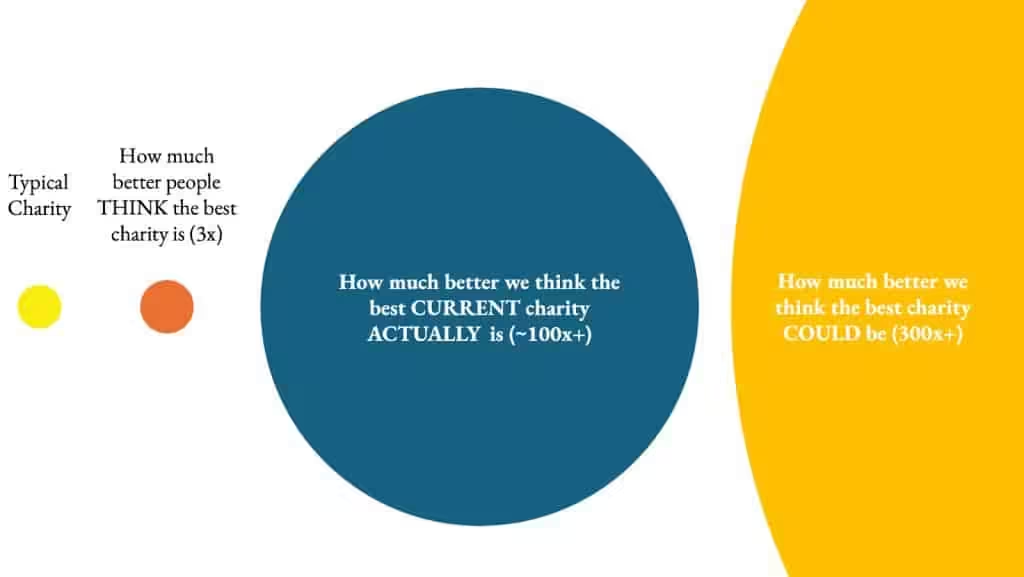
A recent survey we collaborated on found that people think the best charity is around 3x as good as the typical charity at increasing happiness per dollar donated This is a vast, vast underestimate.
After reviewing 24 evaluations of charities’ impact per dollar on happiness we found something remarkable. The evidence suggests that donating to the best charity is closer to ~300x more impactful than donating to the typical charity (coarsely illustrated here). We’re not the only ones who think the difference between the best and the rest are enormous – other charity evaluation experts agree.
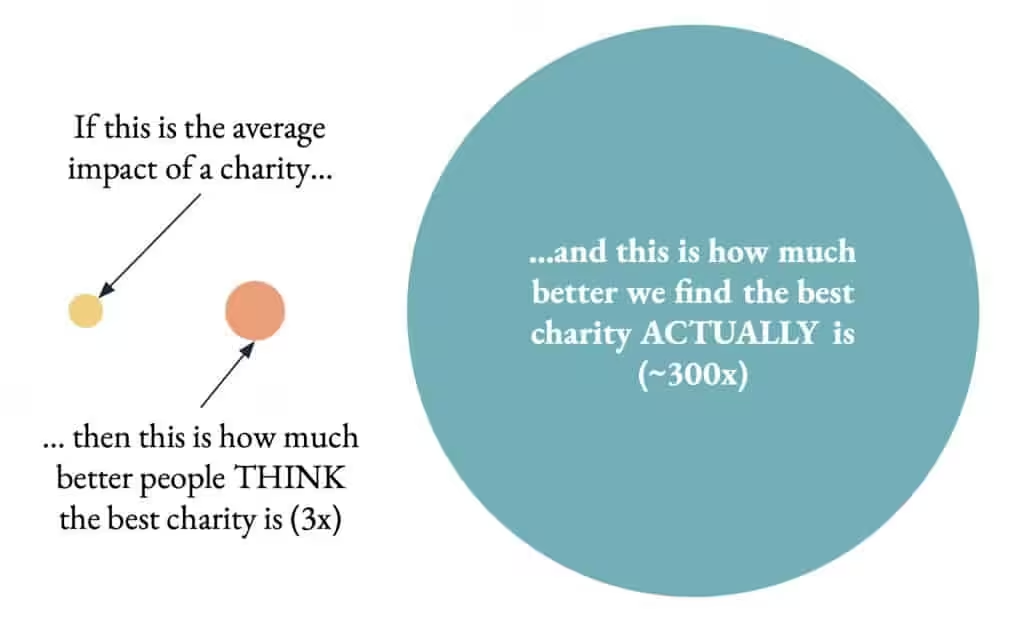
If you can find a deal where you get 33% off a $3,000 gizmo – we imagine you’d think that’s a pretty good deal. One to brag to your mother about. But what about getting a $3,000 value for $10? If you’re offered opportunities like that, you’d (probably rightly) suspect a scam1Is the intuition still not sinking in? Maybe the reference to consumerism comes off as cheap and trivial. Let’s consider something more serious then. Imagine the worst month of your life. How much would you pay to delete it from existence? Would you pay $3,000 (if you had it)? What about if we were talking about the person you love the most? If you’re anything like me, I’d scrounge, borrow and beg to find that money in that case.
Now imagine that you can do the same thing for a stranger. Less poignant, I know. Except you have a choice between paying $3,000 to keep someone from having what will become a record breaking bout of suffering, or do the same exact thing except for $10 instead. Or for 300 people instead of 1. Sure, they may barely be the barest shred of the world to you, but to someone, they’re everything. Something to consider.
This is roughly how I think of the stakes, and why finding and funding the best charities isn’t just a neat deal, it’s a small step to a much better world. Indeed, as my friend and colleague Michael has written, this is one way we can try to reknit a torn world..
But for charity, we are convinced that a deal like that is real and it isn’t a scam. It’s possible for the best charities to be hundreds of times better than the average because no one has evaluated charities’ wellbeing impact until very recently (more on this below).
The best charities for improving wellbeing globally
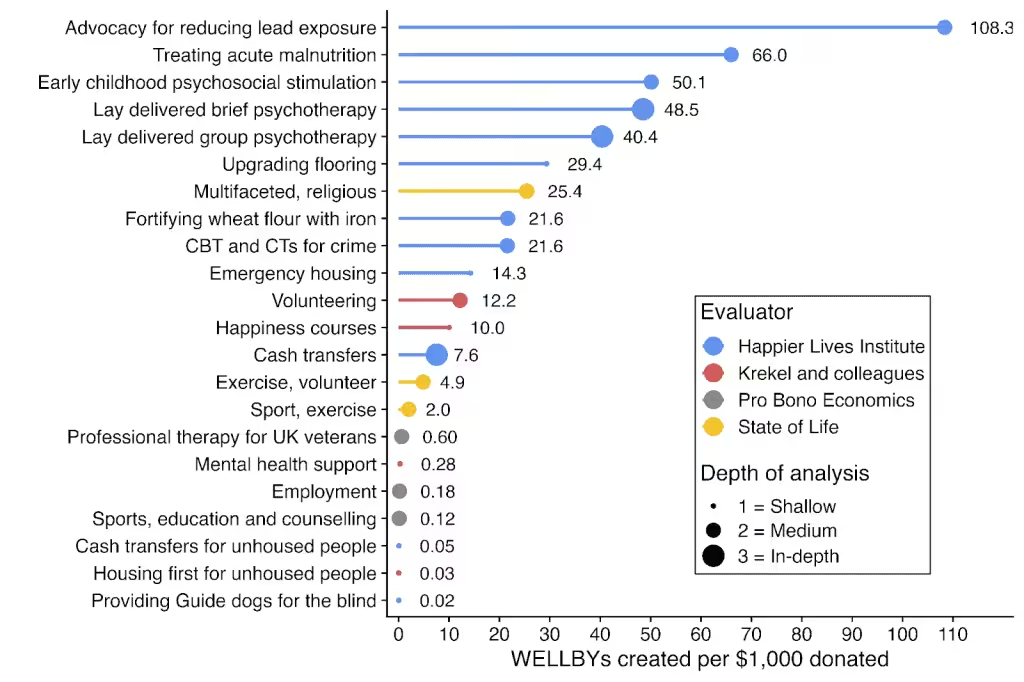
If this is an opportunity for philanthropic arbitrage, no one has had the tools to confirm its existence until now. Indeed, as part of the newly released 2024 World Happiness Report, we published the first global review of charities’ impact on wellbeing years (WELLBYs) per dollar donated.
When we compiled the data, we found that the differences between charities are stark:
Why haven’t I heard about this difference between the best charities and average charities?
The claim that the best charities are hundreds of times more impactful than the average charity, has been common in some niche circles of philanthropy (the effective altruism movement) for at least a decade. This claim has been primarily based on some work that finds that health interventions can differ dramatically in their cost-effectiveness (when measured using a standard health metric). This suggests, but doesn’t demonstrate, the same may be true for charities delivering those interventions.
So why did it take so long to demonstrate that this gap is actually so large for charities?
Before recent advances in psychology and economics allowed us to evaluate charities in terms of wellbeing it was very hard to compare charities or know how much impact you were having. To be clear, it’s still hard, but far from impossible.
Comparing charities to find the best
We needed to compare charities doing very different things in the same terms. The obvious choice was their impact on happiness. But widespread happiness data, and the analytical tools necessary weren’t around until recently. The metric we used, called wellbeing-years (WELLBYs), and wellbeing cost-effectiveness in general, are both less than 10 years old. More importantly, all of the evaluations we used occurred in the past five years (the first were in 2021).
And, if we’re allowed to toot our own horn, before our analysis in the World Happiness Report, there wasn’t much (if any?) direct evidence of how big the per dollar differences in charity impact on happiness were.
We think our review is the first time that large differences in charity impact have been demonstrated with direct evidence.
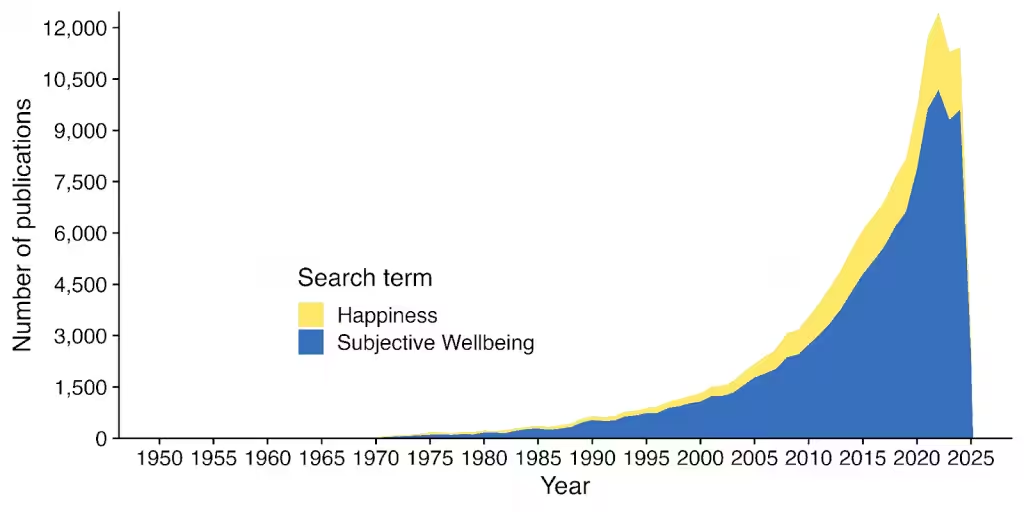
We see this work as the confluence of two separate movements, to which we owe a huge debt. Two incredibly underrated groups have been quietly growing over the past decade: A) a broader wellbeing movement and B) a community committed to finding the highest impact causes to donate to.
The wellbeing warriors: How we measure wellbeing
Many organisations and researchers are tirelessly working to transform how we measure success and impact globally such as:
These dedicated groups are pioneering methods and policies centred around genuine human wellbeing, fundamentally reshaping philanthropy and public policy.
Much of this work leverages and adds to the growing mountain of research that’s been compiled over the past decade in order to turn its insights into real impact.
Finding the best charities: impact-based donating
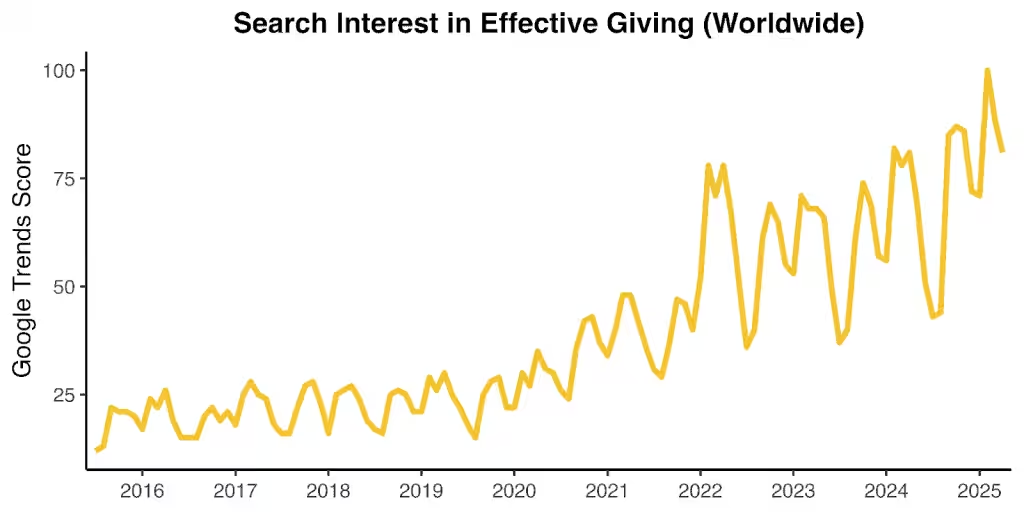
At the same time, the effective giving movement, which advocates donating based on impact rather than tradition, has experienced remarkable growth in interest and funding.
The community is represented by organisations like Giving What We Can and GiveWell that now move millions of dollars to highly effective charities – mostly with a focus on improving health and reducing poverty.
The Happier Lives Institute way: chasing the highest happiness per dollar donated
At the Happier Lives Institute, we aim to combine the best of both of these two movements.
Consider our chapter a first dispatch from a new field, quietly growing underneath the radar.
People care about how effective charities are, but it’s normal to assume that we can’t compare the difference between charities. Especially not in terms of happiness! Let’s change the norm.
While we’re excited about the best charities we’ve found, we don’t think the search is over. Indeed, we think the search has just begun. We’re trying to find the charities that are even more than 300x better than the typical charity. We think they’re out there, we just need more research. Who knows what we’ll discover in another four years?
Join us
The movement needs movers. These communities are small enough that you can make a genuine difference without too much effort! Here’s the best ways to get involved:
- Donate Wisely: Support charities proven to maximise happiness per dollar.
- Learn More: Explore our detailed analysis by reading our chapter in the World Happiness Report 2025.
- Donating to the Happier Lives Institute: Our research costs time and money! If you want to support the Happier Lives Institute to keep shining the spotlight on fantastic charities.
- Staying informed: Sign up for our newsletter to receive updates and insights into effective giving opportunities.
- Spread the Word: Share this information with others who care about making a difference.
Together, we can build a world prioritising genuine happiness and wellbeing for everyone.
Be a part of this movement, join us in making strategic, evidence-based philanthropy the new global standard.